Safety products distributor
Glove and eyewear SKUs need marketplace-length bullets and full web descriptions.
Approach: Channel variants are drafted from cut level, standard and material attributes and routed for approval.
Product Experience Management
Autonera PXM turns governed product data into descriptions, feature copy, spec sheets and catalogs tailored to each channel and market, generated from sources and approved by people.
Choose an experience and a country to see what buyers receive from one governed product record.
Country and language
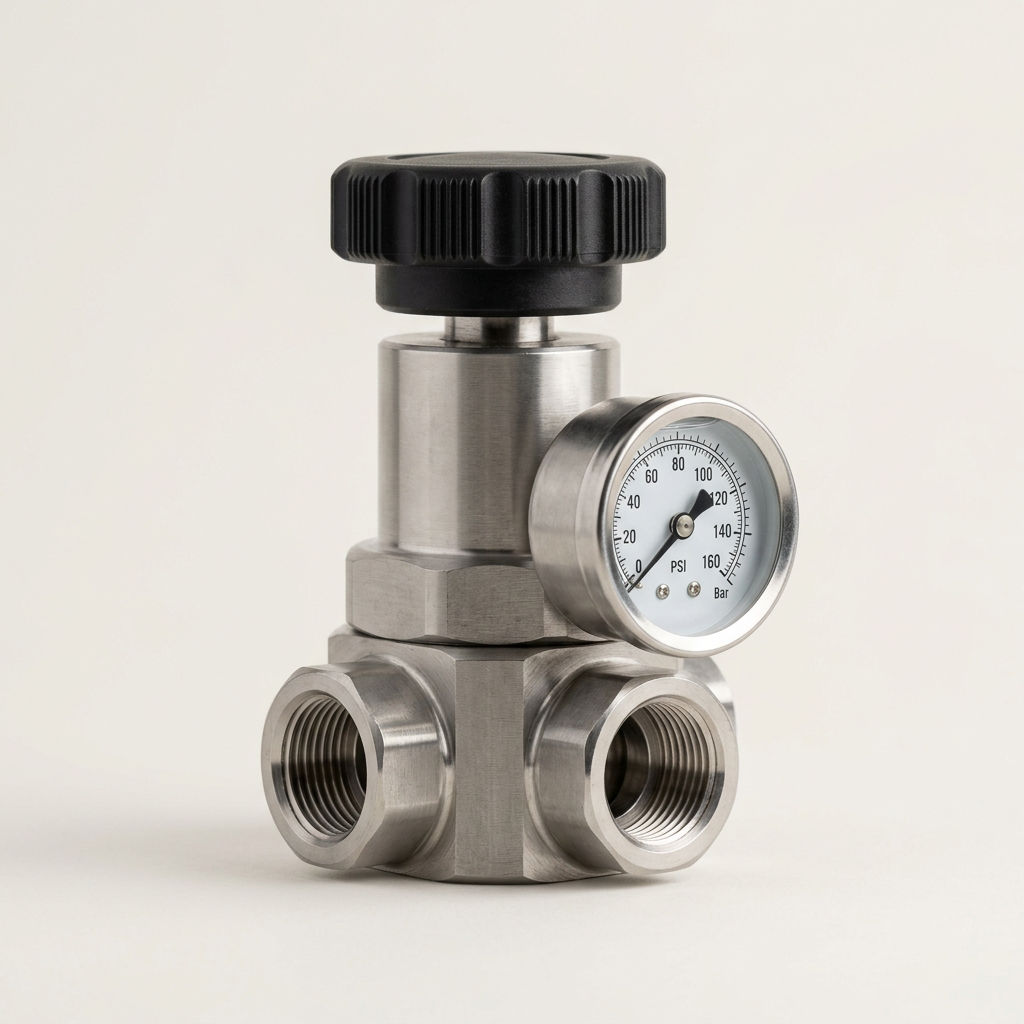
Pressure regulators
A piston-sensing regulator for process and utility lines up to 400 psig inlet. The 316 stainless body and FKM seals suit corrosive service, and twin 1/4 in gauge ports let you mount a gauge on either side of the line.
PIM
Attributes, variants, classification and relationships, governed once.
PXM
Channel copy, localization, rich content, related products, catalogs and spec sheets.
Syndication
Web stores, marketplaces, distributors and partner catalogs, in each destination's format.
Three integrated capabilities of one platform, working from the same governed record.
Channel and locale composition
Switch channel and locale to see how titles, descriptions, attributes and readiness rules adapt, and how approval applies where policy requires it.
Channel
Locale
Channel rule: Long description, feature bullets, full spec table, accessories · Locale: Imperial first
Channel output · Own web store · en-US
A piston-sensing regulator for process and utility lines up to 400 psig inlet. The 316 stainless body and FKM seals suit corrosive service, and twin 1/4 in gauge ports let you mount a gauge on either side of the line.
Content readiness
Channel and locale rules
Why it matters
B2B buyers compare specs, compatibility and compliance before they ever talk to sales. Thin descriptions copied from ERP leave them guessing. PXM builds the experience layer on top of the product record: channel-specific copy, localized content, relationships that suggest the right accessory, and printable documents.
Writing unique, accurate descriptions for tens of thousands of SKUs is not feasible manually.
Translations lag behind source updates and miss technical terminology.
Marketplaces, web stores and print catalogs need different lengths and structures.
Descriptions contradict specification attributes after updates.
Documents
Halden PR-40 piston pressure regulator
HPR-40-316-050 · en-US
| Port size | 1/2 in NPT |
| Max inlet pressure | 400 psig |
| Outlet range | 10–150 psig |
| Body material | 316 stainless steel |
| Seal | FKM |
| Temperature | -15 to 180 °F |
Functional areas
| SKU | en-US | de-DE | fr-CA | es-MX |
|---|---|---|---|---|
| HPR-40-316-050 | Approved | Approved | In review | Approved |
| HPR-40-316-075 | Approved | In review | Gap | In review |
| CLP-WG-12-SS | Approved | Approved | Approved | Gap |
| GLV-CUT-A4-L | In review | Gap | Gap | Gap |
How it works
01
Content requests draw on attributes, linked assets, relationships, style guides and banned-claim lists.
02
Drafts are produced per channel profile and locale, with units and terminology applied.
03
Readiness checks confirm completeness, traceability, renditions and channel rules.
04
Policy routes content to editors, engineering or compliance before it is published.
05
Attribute or asset changes flag dependent content, documents and translations for refresh.
Safety products distributor
Glove and eyewear SKUs need marketplace-length bullets and full web descriptions.
Approach: Channel variants are drafted from cut level, standard and material attributes and routed for approval.
Plumbing manufacturer
A spec sheet per fixture must be produced in two languages.
Approach: Spec sheets are generated from the record and localized with reviewed terminology.
Pneumatics distributor, Canada
Every web product needs English and French content with metric and imperial units.
Approach: fr-CA drafts use managed terminology, bilingual unit display, and separate French approval.
Cutting-tool manufacturer
A coating change updates speed and feed values across 600 inserts.
Approach: Dependent descriptions, spec sheets and catalog tables are flagged for regeneration and review.
Autonomous execution
Every agent action is a proposal with evidence, or an execution inside a boundary an owner configured. Nothing outside policy happens quietly.
PIM governs the product record: attributes, structure, variants and relationships. PXM turns that record into the content a buyer reads in each channel and language, and tracks whether that content is ready and approved.
Only where your policy allows it. Approval can be required by channel, category, locale or content type, and safety-relevant or regulated content can always require a person.
Generated statements reference the attributes they came from. When an attribute changes, dependent content is flagged for regeneration or review instead of drifting.
Translation uses managed terminology per language and converts units according to locale rules. Each locale carries its own approval history. Confirm the languages you need with our team.
Yes. Channel profiles define length limits, structure and prohibited claims, and content is rendered per channel from the same record.
Printable document and digital catalog outputs are supported. Specific formats and layout tooling should be confirmed with our team.
Functions included in this capability.
Your next step
Bring a real data challenge. We will walk through how Autonera would approach it and where your team stays in control.
Book a Demo